Stream it. Love it.
Stream it. Love it.
How can major audio streaming services better appeal to young consumers and motivate migration from ad-supported listening to student subscriptions?
The Problem: How might we encourage young users (ages 18-24) to join and stay on a student music streaming plan by highlighting the value and benefits in a way that resonates with their listening habits and lifestyle?
Task: Manage the end-to-end development and design of a digital product that encourages young users (ages 18–24) to join and stay a student music streaming plan by highlighting the value and benefits in a way that resonates with their listening habits and lifestyle.
Methods: User research via 1:1 interviews and surveys with 100+ students and users, Figma prototyping, A/B testing, prototype iterations, and final product presentation.
Challenges: How do I manage a team of people with varying degrees of experience and vastly different skillsets? How do we engage with a wide variety of Gen Z users to ensure variance and diversity in our data? How can we gather data, design, and iterate within a short time-frame?
Insights: By leveraging product management strategies, like scrum and agile methodologies, I can optimize workflows to maximize group efficiency. Through morning standups, design sprints, and team retrospectives, we can develop and iterate upon prototypes to deliver a final product that maximizes student migration.
The Ten-Week Timeline: Industry research (state of the industry, competitors, existing usage). Research and surveys: gathered data from 100+ existing users on current experience. Digital prototyping via Figma. User research and iteration: A/B tests, user personas, and data from over 12 test users. Final products.
Converting Students to Music Streaming Subscription Plans
Executive Summary
Music streaming is rapidly becoming the main way people listen to music, leading over other listening formats.
Music streaming platforms have significantly grown over the past several years, with streaming accounting for over 89% of revenue in the music industry. In the US, an estimated 99% of college-aged individuals rely on streaming platforms for their listening needs, transforming the music streaming industry into a global superpower. Streaming platforms got over $20 billion in revenue in 2024, and this number is only projected to grow with an estimated global revenue of $78 billion by 2028.
Despite the extensive growth of music streaming platforms, only 24% of music listeners report paying for a music streaming plan (IFPI.org). Yet, subscription streaming generates the most profit out of all music listening formats, with subscription streaming having a 51.2% share of global music industry revenues in 2024. Radio, ad supported streaming, and physical formats all compete against subscription-based listening.
Introduction
While student discount plans exist for music streaming platforms, the migration rate from free ad-supported streaming to paid student plans is comparatively lower than the overall migration rate from free to paid plans. Most music platforms lean on discounts and bundling perks, like Spotify’s Hulu add-on or Apple’s offer with Apple TV+, to motivate student migration. Yet, this strategy does not yield a strong uptick in student migration. To appeal to Gen Z and Gen Alpha, generations that values identity, community, and personalization online, streaming platforms must move beyond passive listening and bundled offers to deliver experiences that resonate with young people’s interests and digital needs.
This project presents new findings on the music habits of college students aged between 18-24 years, and explores how community-based features can drive deeper engagement and spur user migration.
Research Methodology
Phase 1: Survey Research
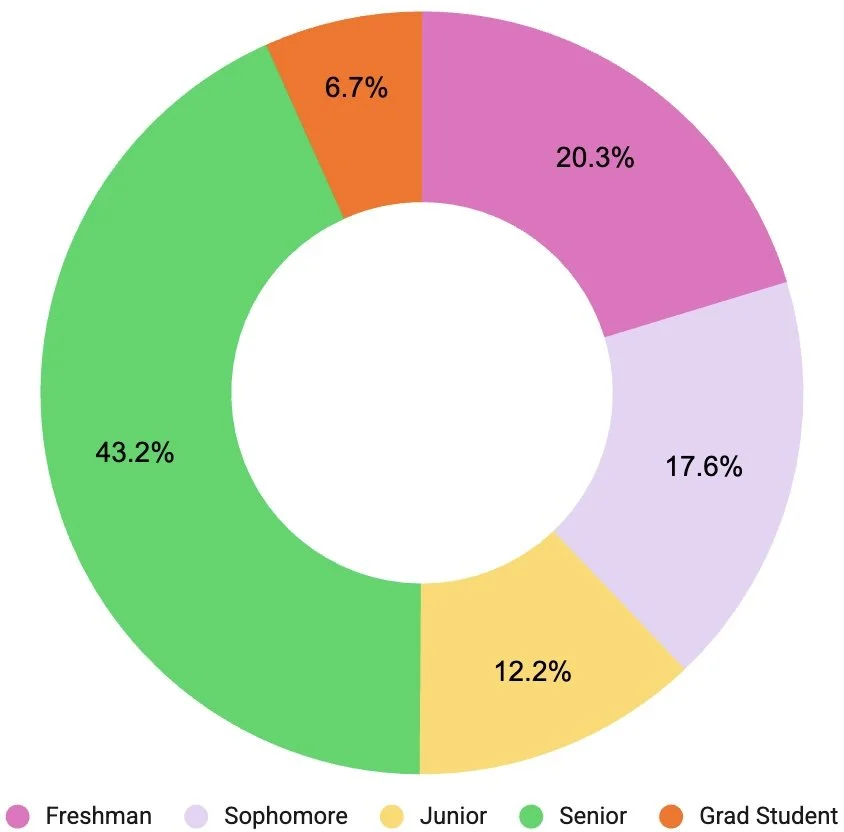
Surveyed over 100 college students (ages 18-24) from diverse areas of study and class years
55.4 upperclassmen, providing insights from students embedded in campus culture
Focus on listening habits, subscription status, and desired features
Phase 2: In-Depth Interviews
12 detailed interviews with students across different subscription statuses
Prototype testing of proposed features
Qualitative validation of survey findings
Phase 3: User Testing
Iterative prototype testing through UserTesting.com
12 additional students testing refined feature concepts
Quantitative validation of features
Findings
Beyond basic listening, students use music to express identity, discover new content, and connect with others. However, many current features on music streaming platforms fall short of fully enabling these activities. Many students reported a desire for deeper social features and more authentic discovery tools. They want to see what their peers are listening to, share music easily, and find people with similar listening tastes.



Strategic Direction
Based on the research findings, there were three key areas in which strategic designs would strengthen student migration to paid streaming plans.
1. The Entry Point
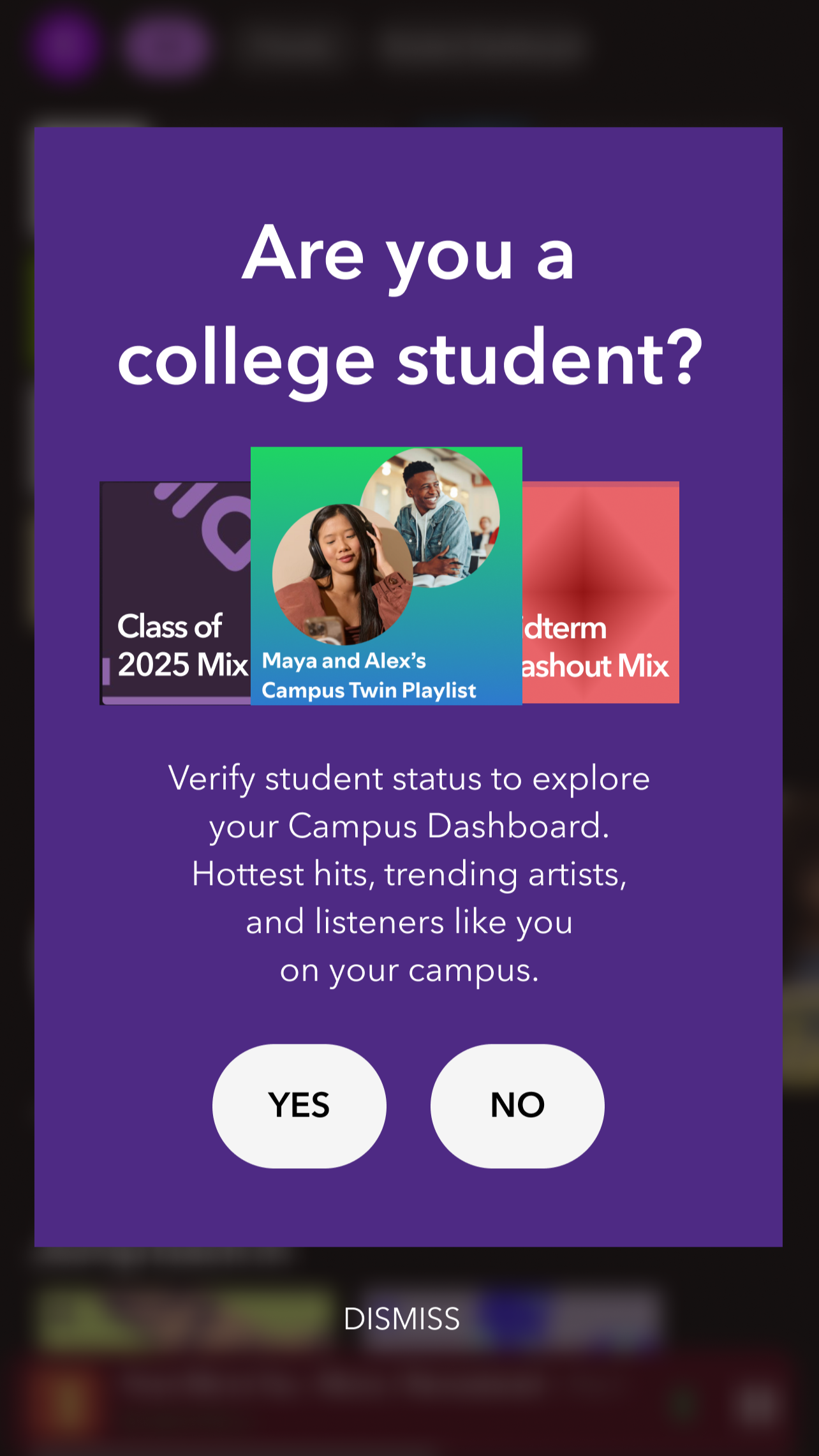
This pop-up is automatically displayed on the home screen upon launching the platform. Targeted towards users aged 18-24, the CTA raises awareness of the premium student plan for eligible users.
2. The Core Features
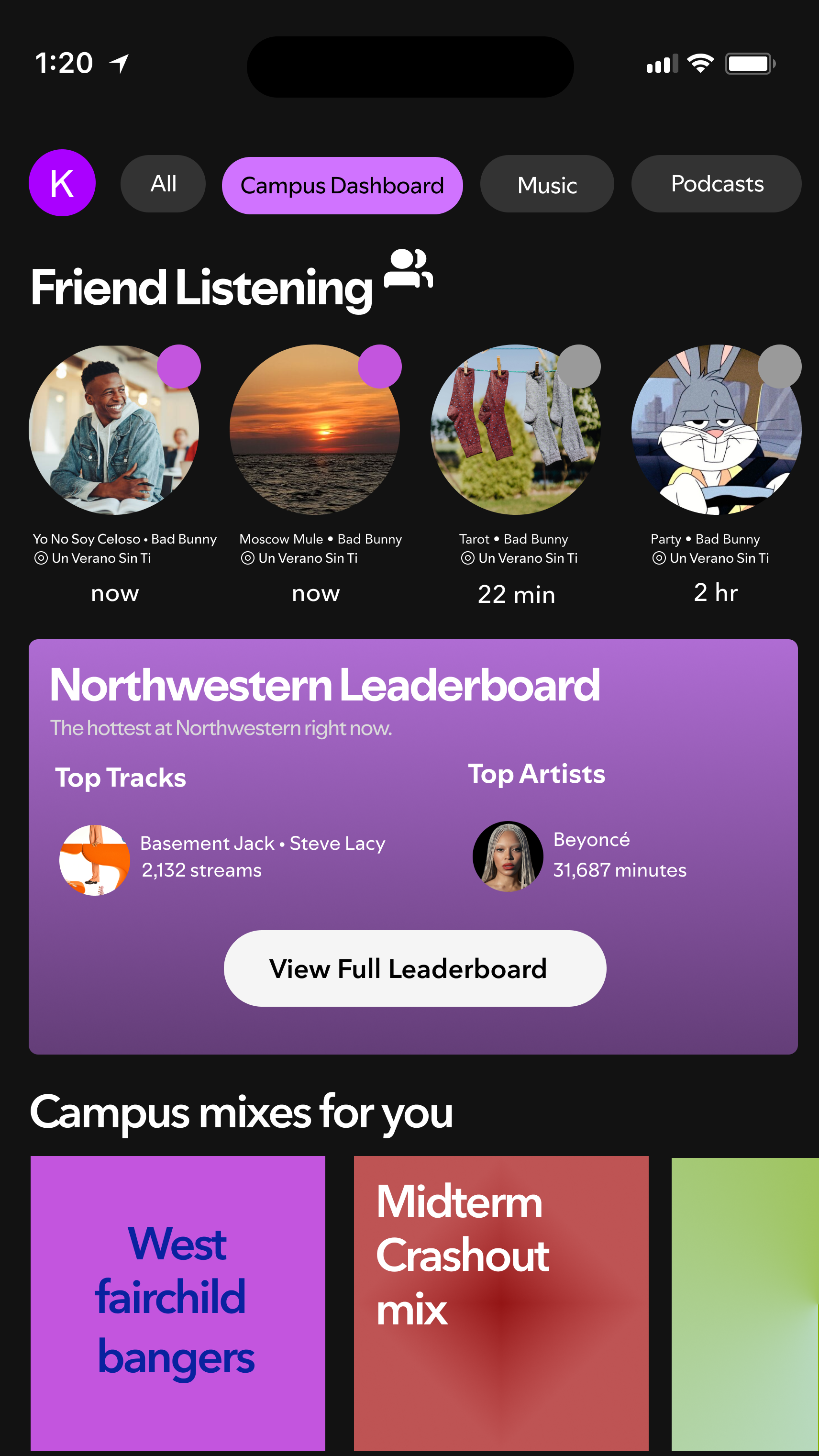
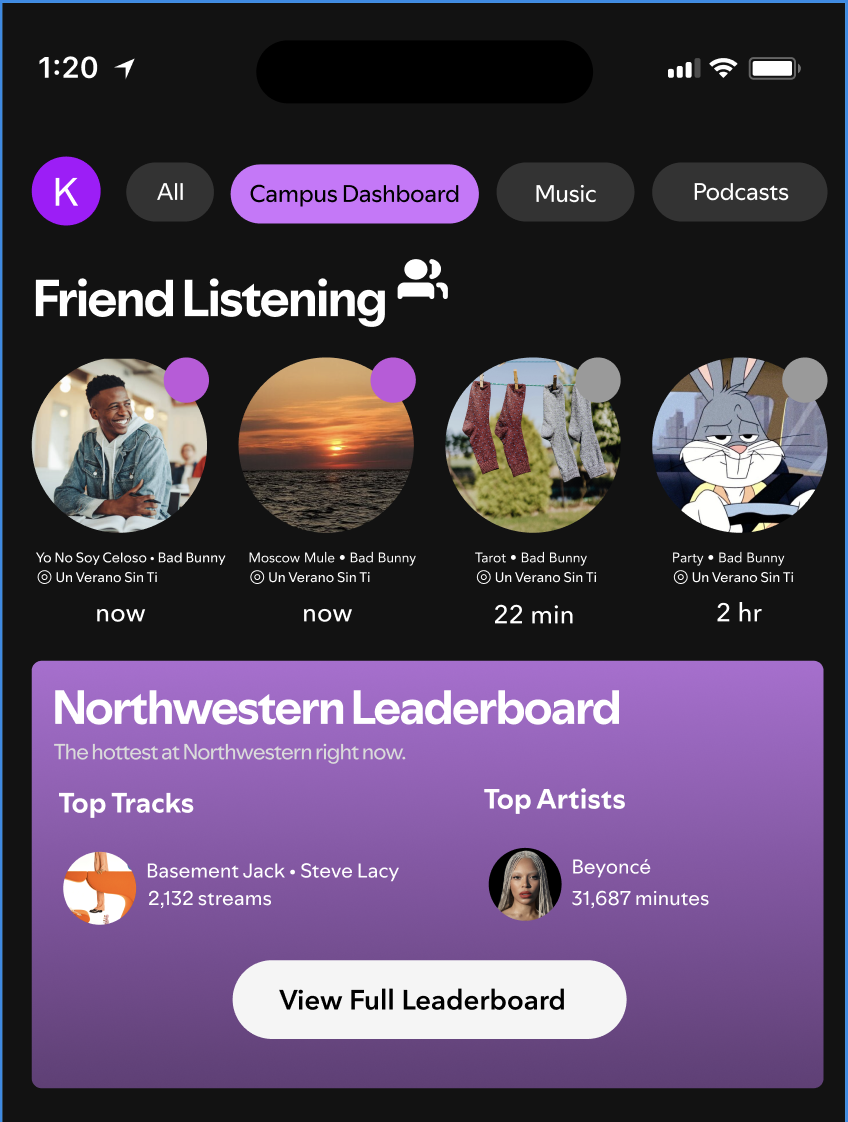
This Campus Dashboard gives students a “freemium” preview of student subscription features, generating interest in the product and subscription offerings.
3. The Hook
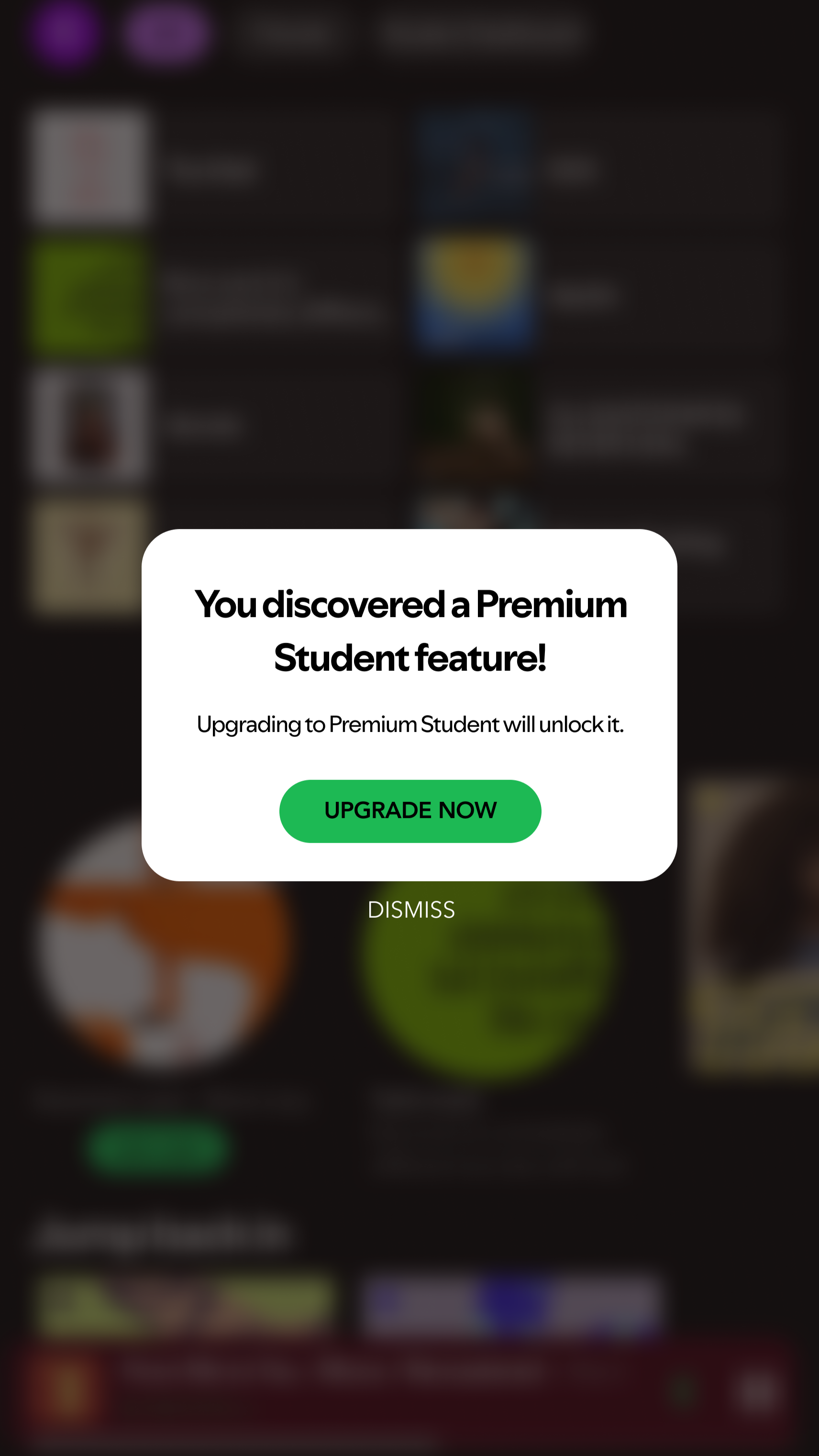
After getting a preview of what the premium plan has to offer, users are prompted to upgrade to unlock further features. encouraging plan migration.
Conclusion
The music streaming industry has successfully captured college
students as users but has not done a great job to convert them into
paying subscribers at scale, beyond roughly 60% as our user testing
suggests. Our research reveals that this isn't a pricing problem, but
rather a value problem. Students don’t want cheaper music, as the
price is already half of our individual premium plan users pay, they
want music that connects them to their campus community.
Key Takeaways:
Community: Majority of students will pay for premium student,
but to get a higher number than that would require enhancing the
social feature campus experience.Social discovery beats algorithms: so far, peer recommendations
and community trends drive music discovery much more
effectively than algorithmic suggestions alone. Therefore, adding
the community aspect will drive more users to streaming services.Campus-specific Context: Students will resonate more with
campus-specific community tools to connect with people with
similar music taste.Identity through music: For Gen Z, music taste is a core part of
personal identity and social connection, so platforms should
facilitate this and prioritise it.
All in all, this work shows how a deeper understanding of campus
listening habits and digital identity can unlock product opportunities
that feel both playful and personal. For any platform targeting Gen Z,
the next wave of innovation is social.